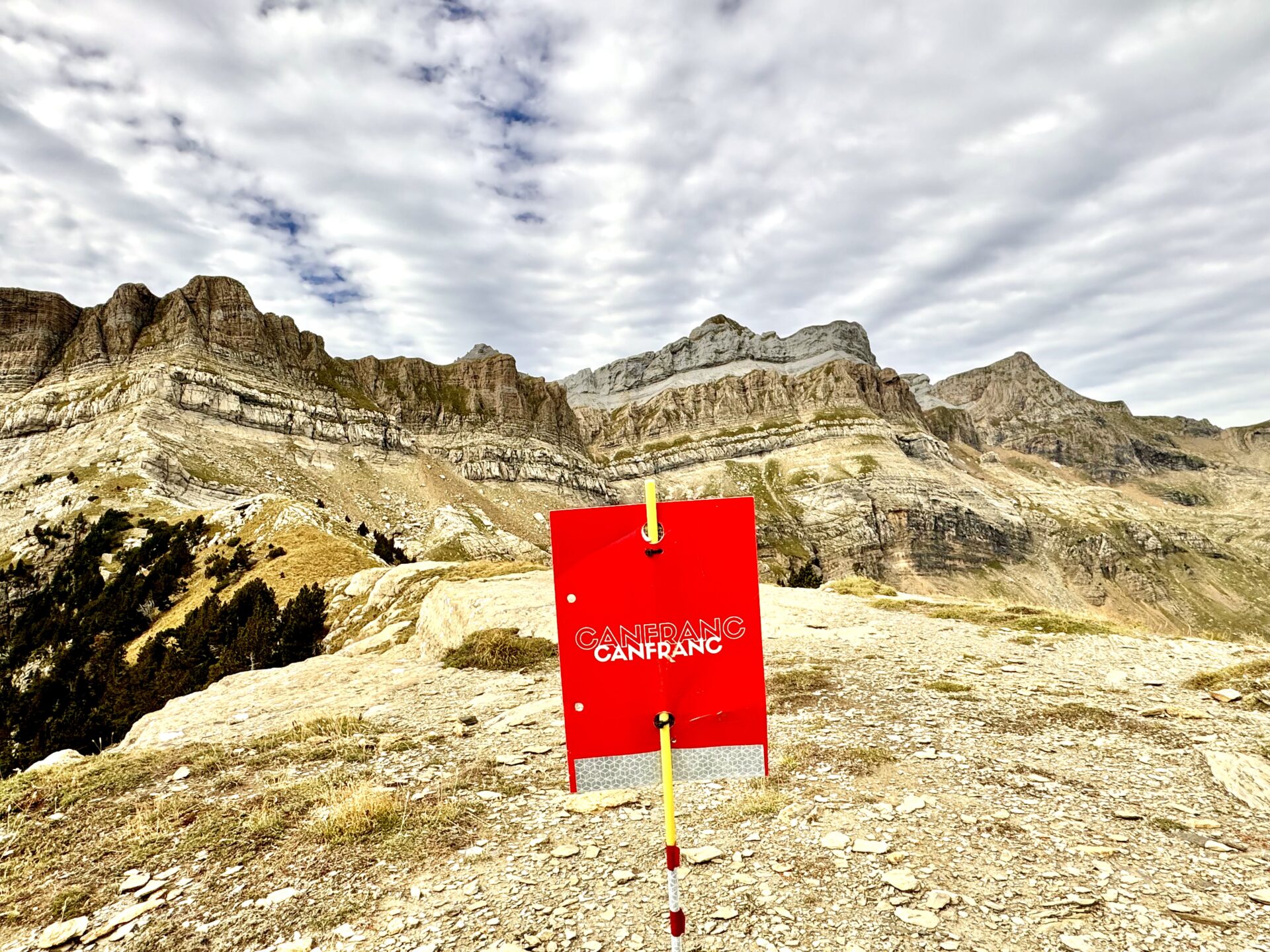
An avalanche devastated Los Arañones in the year 1040, driving out its inhabitants. Nearly a thousand years later, that same Pyrenean plain—now protected by millions of trees and hundreds of dry dams—will host the World Mountain & Trail Running Championships around the Canfranc International Station, which celebrates its 97th birthday on July 18.
Understanding the passion Canfranc’s people have for mountain running is impossible without knowing its geography, history, and unique relationship with the mountains. A hundred years ago, seven million trees were planted where there was once only rock, energy was harnessed from alpine lakes and snowmelt, and pioneering models in civil and hydro-forestry engineering were put into practice—models that are now recognized worldwide.
Canfranc was born in the 11th century as Campus francus when the people of Los Arañones, displaced from the alpine plain, sought refuge to rebuild their lives in what we now call Canfranc Pueblo. Since then, they have embraced hospitality—as evidenced by the Jacobean remains of the medieval Hospital of Santa Cristina de Somport in today’s Candanchú, or the Pilgrims’ Bridge in Canfranc, built in the 11th century and rebuilt in 1599.
Living face-to-face with the mountains—and blending with them—made this land the chosen place to build the iconic Franco-Spanish international railway station in 1928, under the project of Fernando Ramírez de Dampierre. It was a feat made possible only by the revolutionary “dry dam” method, through which forestry engineer Benito Ayerbe and hundreds of workers from across Spain demonstrated to the world—using nothing but picks, shovels, and mules—how to create magnificent forests and open-faced stone walls in harsh, barren mountains. A century later, those same structures still protect the station and the people of Canfranc, while enriching the region’s flora and fauna.
CANFRANC, A MECCA FOR MOUNTAIN SPORTS
Skiing took off in Spain with great force in 1928. As early as 1925 in Zaragoza, pioneering skier Lorenzo Almarza dreamed of a resort in these mountains. Starting in 1927, ski mountaineering became common among soldiers stationed at Col de Ladrones, under the leadership of Captain Eugenio Bonelli. It was only natural that, once the train arrived in Canfranc in July 1928, that same winter saw the opening of the Candanchú ski resort—with a distinct style: alpine and technically demanding, but with a welcoming spirit.
The Canfranc-Canfranc Mountain Marathon was born in 2007 with that same spirit.
Its route was as logical from a mountaineering perspective as it was fierce from an athletic one. It was the first “four-thousander” among Spanish alpine marathons, and today—almost 20 years later—its winners list is a veritable “who’s who” of the world’s great mountain runners, many of whom have left their mark here.
The current mayor of Canfranc, Fernando Sánchez, remembers it with a hint of nostalgia:
“When we launched the first Canfranc-Canfranc, I was already there. It’s the same marathon that will be run at the World Championships now. I remember just over 20 people showed up back then. It was just something extra we did, something we were passionate about. For years we never got past 140 participants. Eventually, we decided to give it a real push—to show off our mountains the way they deserved. We created an ultra route that summited ten nearby peaks… and runners believed in us. Since then, they’ve come in droves, and now the whole world talks about Canfranc-Pyrenees.”
That’s how, in 2015, this pioneering marathon expanded to include new modalities. The legendary ultra distances arrived, including the world’s longest 100km (100k/D+8,840m), the massive vertical climb from the Rioseta cirque to the summit of Tuca Blanca (4k/D+950m), and its sister route to nearby Porté (38k/D+1,100m), not to mention the Classic course and the breathtaking out-and-back to La Moleta (16k/D+1,600m).
The strong character of these routes—so logical and tough from a trail running perspective—won over the federations, both the Mountain Sports Federation (FEDME) and the Athletics Federation (RFEA). They trusted Canfranc to host first the Aragon championships, then the Spanish championships, later World Cups, and finally, in 2024, the first Masters World Championship—serving as a prelude to the World Mountain & Trail Running Championships coming this September 2028.
Wherever they are today, Fernando Ramírez de Dampierre, Benito Ayerbe, Eugenio Bonelli, and Lorenzo Almarza are surely smiling at the sight of the 80 nations parading on September 24. Because it all started with them—97 years ago.
SERGIO MAYAYO | Press office manager WMTRC 2025